









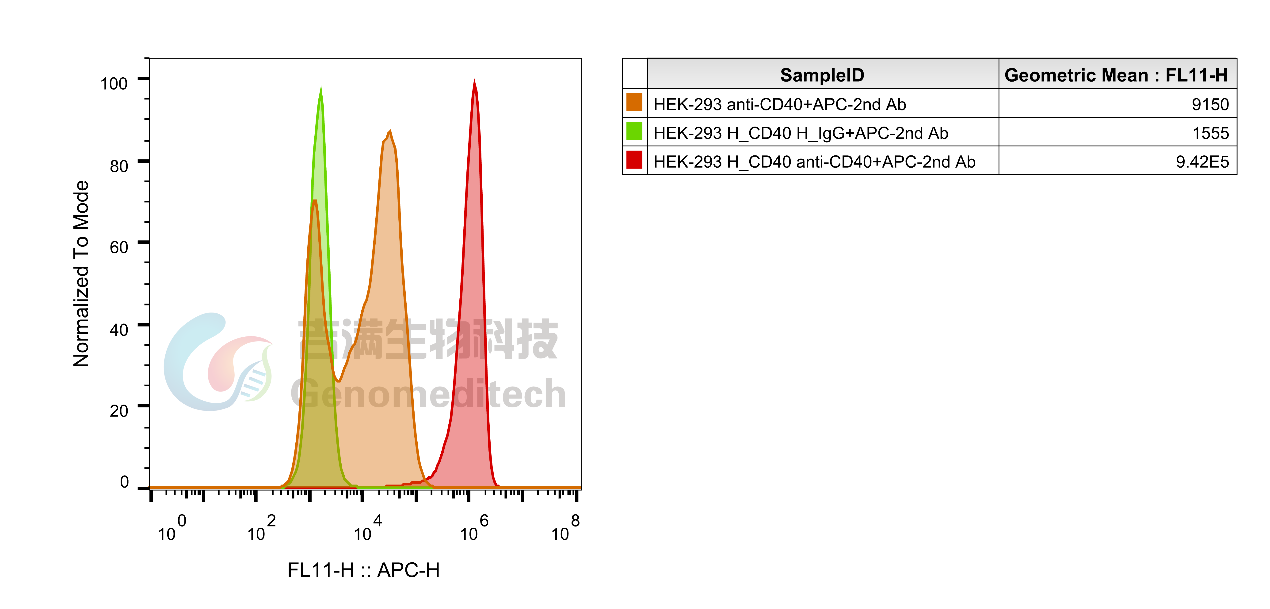
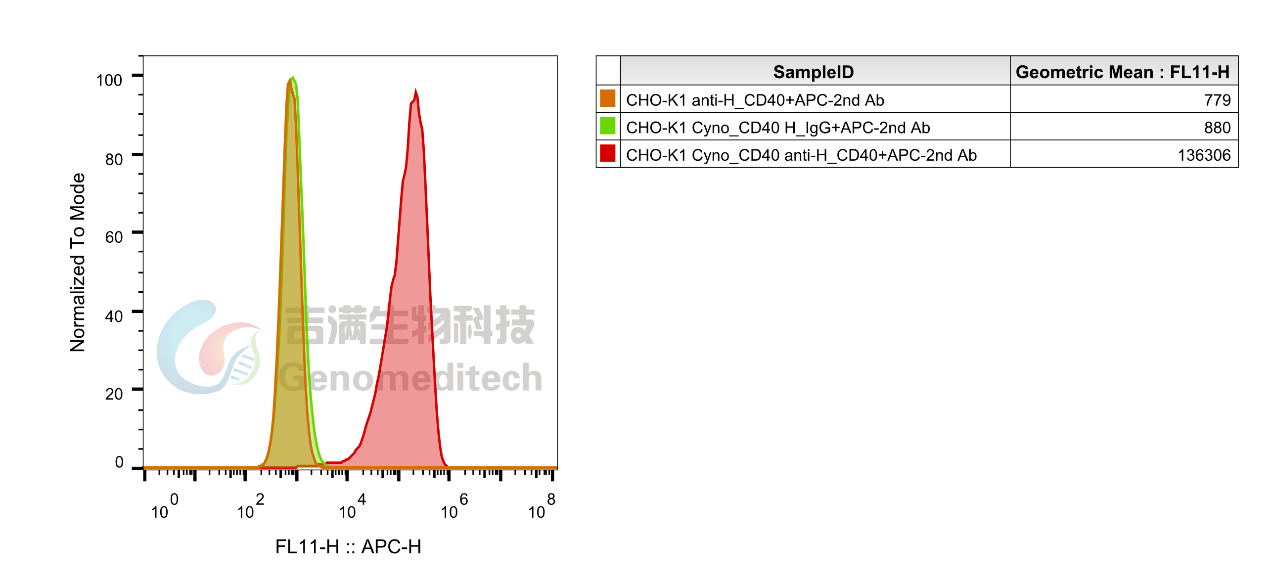
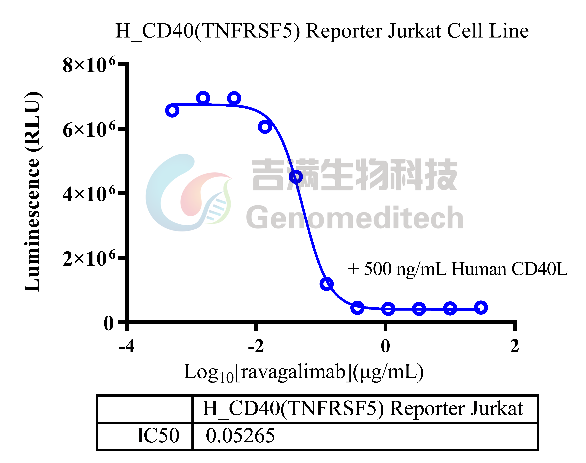
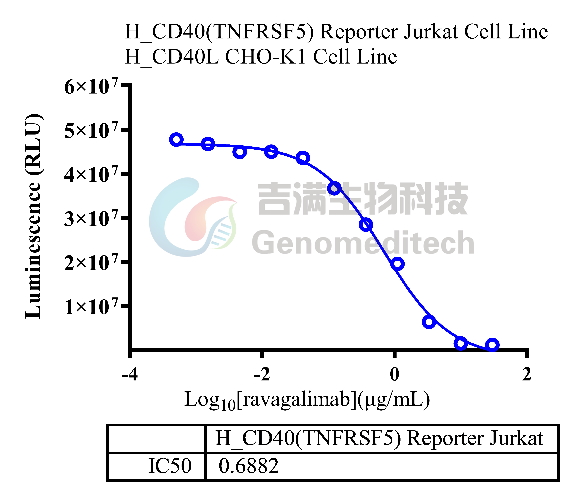





| Species Reactivity | Human; |
| Clone | ravagalimab |
| Source/Isotype | Monoclonal human IgG1, κ |
| Application | Flow cytometry; Block assay ; ELISA |
| Specificity | Detects CD40 |
| Gene | CD40 |
| Other Names | Bp50,P50,CD40,TNFRSF5 |
| Gene ID | 958(human);102118696(Cynomolgus) |
| Background | CD40 is a receptor protein on the cell membrane, belonging to the tumor necrosis factor receptor superfamily. It plays an important role in the immune system, primarily regulating the function of immune cells by binding to its ligand. The CD40 signaling pathway plays a crucial role in immune responses, inflammation regulation, apoptosis, and other processes. Studying the function and regulatory mechanisms of CD40 helps deepen our understanding of the principles of the immune system and provides a theoretical basis for the development of immune-modulating therapies. |
| Storage | Store at 2-8℃ short term (1-2 weeks).Store at ≤ -20℃ long term. Avoid repeated freeze-thaw. |
| Formulation | Phosphate-buffered solution, pH 7.2. |
| Endotoxin | < 1 EU/mg, determined by LAL gel clotting assay |
| Species Reactivity | Human; |
| Clone | ravagalimab |
| Source/Isotype | Monoclonal human IgG1, κ |
| Application | Flow cytometry; Block assay ; ELISA |
| Specificity | Detects CD40 |
| Gene | CD40 |
| Other Names | Bp50,P50,CD40,TNFRSF5 |
| Gene ID | 958(human);102118696(Cynomolgus) |
| Background | CD40 is a receptor protein on the cell membrane, belonging to the tumor necrosis factor receptor superfamily. It plays an important role in the immune system, primarily regulating the function of immune cells by binding to its ligand. The CD40 signaling pathway plays a crucial role in immune responses, inflammation regulation, apoptosis, and other processes. Studying the function and regulatory mechanisms of CD40 helps deepen our understanding of the principles of the immune system and provides a theoretical basis for the development of immune-modulating therapies. |
| Storage | Store at 2-8℃ short term (1-2 weeks).Store at ≤ -20℃ long term. Avoid repeated freeze-thaw. |
| Formulation | Phosphate-buffered solution, pH 7.2. |
| Endotoxin | < 1 EU/mg, determined by LAL gel clotting assay |